
Blog
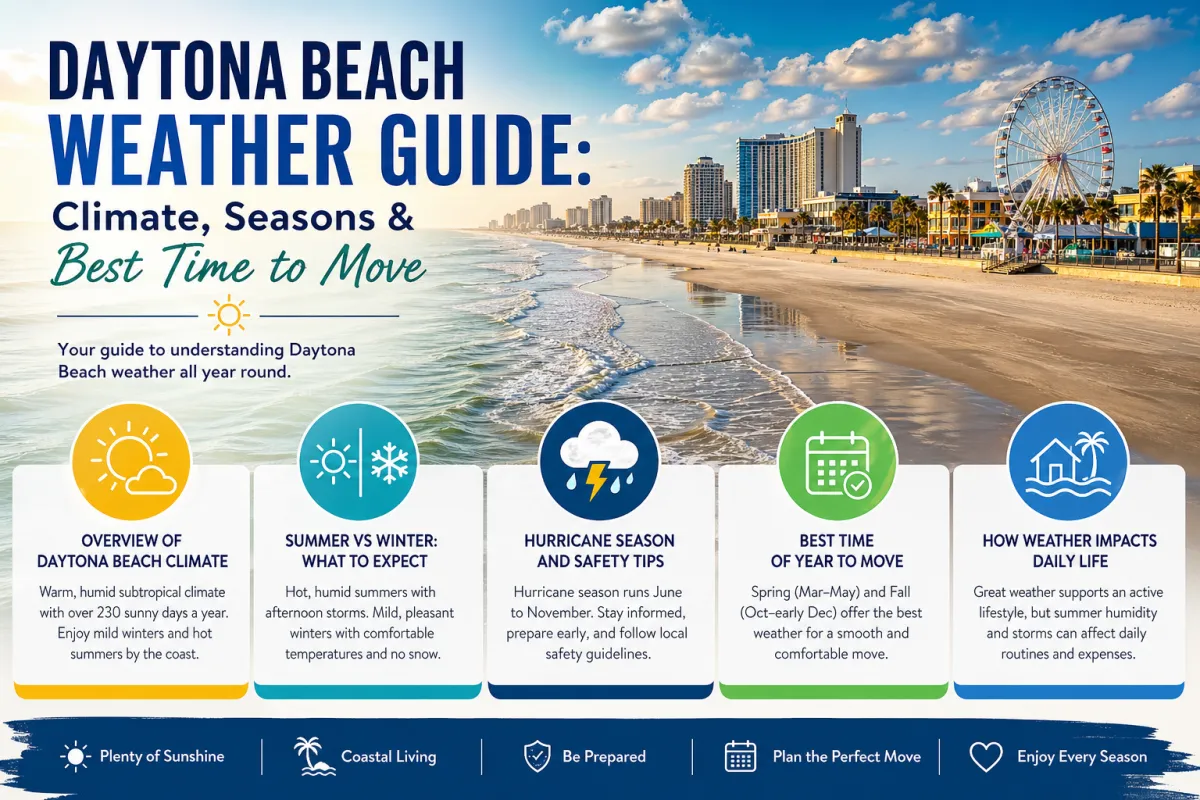
Daytona Beach Weather Guide: Climate, Seasons & Best Time to Move
Overview of Daytona Beach Climate
Located along Florida’s Atlantic coast, Daytona Beach experiences a humid subtropical climate characterized by warm temperatures and plenty of sunshine throughout the year. The city enjoys over 230 sunny days annually, making it an attractive destination for those who prefer outdoor living and coastal environments.
The proximity to the ocean helps regulate temperatures, preventing extreme highs and lows. This balanced climate supports year-round activities, contributing to the area’s lifestyle appeal and influencing housing decisions, especially for those considering relocation.
Summer vs Winter: What to Expect
Summers in Daytona Beach are typically hot and humid, with temperatures ranging between 28°C to 34°C (82°F to 93°F). Afternoon thunderstorms are common during this season, often providing short but intense rainfall that cools down the surroundings.
Winters, on the other hand, are mild and pleasant. Temperatures usually stay between 15°C to 24°C (59°F to 75°F), making it one of the most comfortable seasons in the region. Unlike northern states, snowfall is nonexistent, and freezing temperatures are rare.
For individuals exploring employment opportunities or planning finances, seasonal weather patterns can also influence daily routines, commuting comfort, and overall cost of living.
Hurricane Season and Safety Tips
Daytona Beach falls within the Atlantic hurricane zone, with the official hurricane season running from June through November. While direct hits are not frequent, tropical storms and heavy rains can occur during this period.
Residents are encouraged to stay informed through reliable weather updates and prepare emergency kits that include essentials like water, food, and first-aid supplies. Local authorities provide timely alerts and safety guidelines to ensure public well-being.
Modern infrastructure and improved forecasting systems have significantly enhanced preparedness, making it easier for residents to manage weather-related risks effectively.
Best Time of Year to Move
The ideal time to move to Daytona Beach is during the spring (March to May) or fall (October to early December). During these months, the weather is moderate, humidity levels are lower, and moving conditions are more comfortable.
Spring offers blooming landscapes and pleasant temperatures, while fall provides a calmer environment after the peak tourist season. These periods are often preferred by individuals planning relocation, as they allow smoother transitions without extreme weather disruptions.
Weather also plays a role when evaluating housing availability, moving logistics, and settling into a new environment.
How Weather Impacts Daily Life
Weather in Daytona Beach significantly influences everyday living. Outdoor activities such as Overview of Daytona Beach Climate
Located along Florida’s Atlantic coast, Daytona Beach experiences a humid subtropical climate characterized by warm temperatures and plenty of sunshine throughout the year. The city enjoys over 230 sunny days annually, making it an attractive destination for those who prefer outdoor living and coastal environments.
The proximity to the ocean helps regulate temperatures, preventing extreme highs and lows. This balanced climate supports year-round activities, contributing to the area’s lifestyle appeal and influencing housing decisions, especially for those considering relocation.
Summer vs Winter: What to Expect
Summers in Daytona Beach are typically hot and humid, with temperatures ranging between 28°C to 34°C (82°F to 93°F). Afternoon thunderstorms are common during this season, often providing short but intense rainfall that cools down the surroundings.
Winters, on the other hand, are mild and pleasant. Temperatures usually stay between 15°C to 24°C (59°F to 75°F), making it one of the most comfortable seasons in the region. Unlike northern states, snowfall is nonexistent, and freezing temperatures are rare.
For individuals exploring employment opportunities or planning finances, seasonal weather patterns can also influence daily routines, commuting comfort, and overall cost of living.
Hurricane Season and Safety Tips
Daytona Beach falls within the Atlantic hurricane zone, with the official hurricane season running from June through November. While direct hits are not frequent, tropical storms and heavy rains can occur during this period.
Residents are encouraged to stay informed through reliable weather updates and prepare emergency kits that include essentials like water, food, and first-aid supplies. Local authorities provide timely alerts and safety guidelines to ensure public well-being.
Modern infrastructure and improved forecasting systems have significantly enhanced preparedness, making it easier for residents to manage weather-related risks effectively.
Best Time of Year to Move
The ideal time to move to Daytona Beach is during the spring (March to May) or fall (October to early December). During these months, the weather is moderate, humidity levels are lower, and moving conditions are more comfortable.
Spring offers blooming landscapes and pleasant temperatures, while fall provides a calmer environment after the peak tourist season. These periods are often preferred by individuals planning relocation, as they allow smoother transitions without extreme weather disruptions.
Weather also plays a role when evaluating housing availability, moving logistics, and settling into a new environment.
How Weather Impacts Daily Life
Weather in Daytona Beach significantly influences everyday living. Outdoor activities such as beach visits, cycling, and walking are common due to the favorable climate. However, summer humidity may require adjustments in daily schedules, with many residents preferring early morning or evening activities.
Local Daytona Beach real estate expert Mark Valerien helps buyers time their move around the seasons — lining up spring or fall relocation with the right neighborhood and home so the transition stays smooth.
The climate also affects utility usage, especially air conditioning during warmer months, which can impact monthly expenses. Additionally, seasonal weather patterns can influence commuting, especially during heavy rains or storms.
For those evaluating lifestyle factors, weather is closely connected to comfort, work-life balance, and long-term living decisions. It also plays a role in comparing advantages and challenges when considering a move, helping individuals make informed choices based on personal preferences., cycling, and walking are common due to the favorable climate. However, summer humidity may require adjustments in daily schedules, with many residents preferring early morning or evening activities.





Disclaimer: All information contained on this website is deemed reliable but not guaranteed. All properties are subject to prior sale, change or withdrawal notice www.btrealtors.com believes all information to be correct but assumes no legal responsibility for accuracy.