Port Orange Public Transportation & Commute Guide
Port Orange offers a balanced suburban lifestyle with relatively easy commuting options to nearby employment hubs like Daytona Beach, Orlando, and other parts of Volusia County. While it is primarily a car-dependent city, residents benefit from well-connected road networks and regional transit options that make daily travel convenient.
For people planning relocation, commuting patterns are closely tied to lifestyle decisions, which are also covered in the guide to moving to Port Orange.
Transportation Options in Port Orange
Transportation in Port Orange is mainly centered around private vehicles, but residents also have access to regional transit and ride-sharing services.
Most daily commuting is done by car due to the city’s suburban layout, but biking and walking are common within residential neighborhoods and community areas. Ride-sharing platforms also provide convenient alternatives for short trips or airport travel.
This transportation setup is often considered when evaluating different neighborhoods and their distance from key lifestyle areas such as beaches and shopping centers.
Road Connectivity and Highways
Port Orange has strong road connectivity, making it easy to travel within the city and to nearby destinations.
Key highways include:
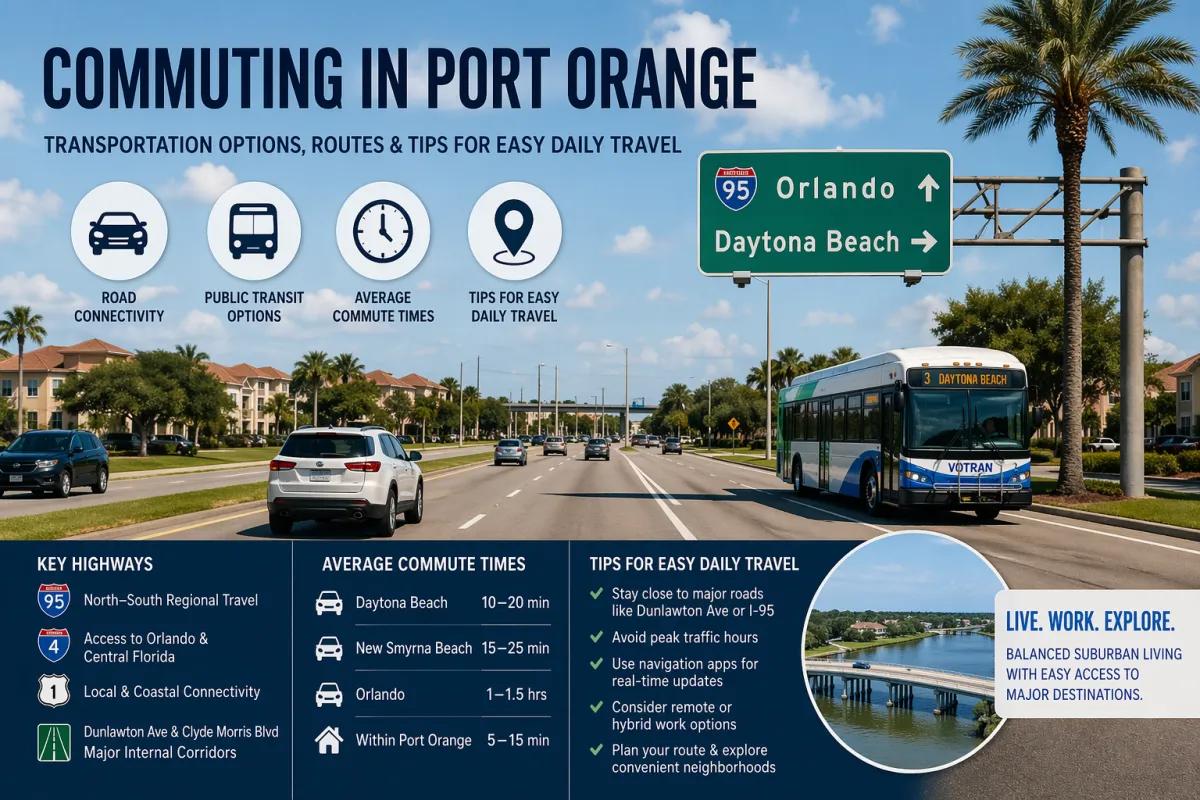
Interstate 95 (I-95) for north-south regional travel
Interstate 4 (I-4) providing access to Orlando and Central Florida
US-1 for local connectivity and coastal access
Dunlawton Avenue and Clyde Morris Boulevard as major internal corridors
These routes connect residents to employment hubs, healthcare centers, and commercial districts. Strong highway access is also one of the reasons Port Orange continues to see steady growth in housing demand and economic activity.
Public Transit Services Available
Public transportation in Port Orange is limited but supported by regional systems.
The primary service is VOTRAN, Volusia County’s public bus system, which connects Port Orange with Daytona Beach and surrounding areas. While it may not be as extensive as urban transit systems, it provides an affordable option for commuters who do not drive.
Many residents also rely on park-and-ride options or commute-sharing arrangements for work travel, especially those working in nearby cities.
Average Commute Times in the Area
Commute times in Port Orange are generally moderate compared to larger metropolitan areas.
Typical travel estimates:
Daytona Beach: 10–20 minutes
New Smyrna Beach: 15–25 minutes
Orlando: 1–1.5 hours depending on traffic
Local commuting within Port Orange: 5–15 minutes
The relatively short commute to nearby job hubs is one of the key reasons people consider relocating to the area. It allows residents to enjoy suburban living while still accessing regional employment opportunities, a factor closely tied to the Port Orange relocation guide.
Tips for Easy Daily Travel
Living in Port Orange becomes much easier with a few smart commuting strategies:
Choose housing close to major roads like Dunlawton Avenue or I-95
Avoid peak traffic hours when traveling toward Daytona Beach or Orlando
Use navigation apps for real-time traffic updates
Consider remote or hybrid work options to reduce daily commuting stress
Explore neighborhoods based on commute convenience, especially if working outside the city
These travel habits help residents maintain a better work-life balance while enjoying the suburban lifestyle Port Orange offers.
Final Thoughts
Port Orange provides a practical and well-connected commuting environment for a suburban city. While it is primarily car-dependent, its strong highway network and proximity to major employment hubs make daily travel manageable.
For families and professionals, transportation convenience plays a key role in relocation decisions. This guide connects closely with broader topics such as cost of living, neighborhood selection, and overall economic growth in Port Orange.